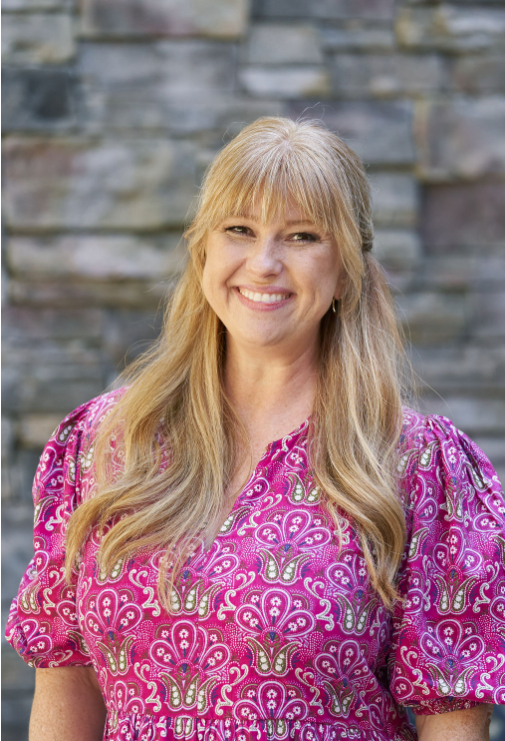
Over the past 3 years, I’ve been making steady changes to my life in the health realm. I’ve lost 63 pounds in those 3 years – on a 5’2” frame, that’s about ⅓ of my prior body weight. Now more than ever, people make comments about it. I respond with platitudes, thanks, it’s hard work but worth it, oh, it’s all about getting healthier, or “it’s a lifestyle!” Meanwhile, there is a voice in my head screaming “Too bad you let yourself be 80 lbs overweight for so long! Don’t forget, you let yourself get fat – so this won’t last unless you…” It goes on, but no need to belabor that point. As women, we know this about ourselves – we have an internal talk track, and we speak to ourselves in a manner that is FAR more harsh, deprecating, and simply cruel than we would ever, ever, ever consider speaking to another human being.
And the other thing this voice tells me often, as yours has likely told you – “I’m a financial mess. I’ve failed to secure a worry-free future for my family. I knew all the traps and I fell into them anyway. Who would trust me as a professional when my personal finances are a profound disaster?” I’m sick of that talk track. I’m sick of it for me, and I’m sick of it for you. The way to become a financial success isn’t about beating ourselves up. I can promise you this – because I’ve been doing it for over a decade, until I decided to change. To approach my financial stability like I approach any other project – plan, break it down and do one thing at a time, forgive yourself for slip ups and move on, and keep going.
You see, when we embark upon change, our brains literally HATE it. Your brain likes homeostasis – staying the same. That’s so that it can continue to predict what you’re going to do. We believe that our brains are functioning like a camera, capturing live streaming data through our senses. But it’s actually not true. Our brains use our memories to supplement all that data coming in and to process it more quickly – it’s more efficient this way. Women’s brains specifically go through 3 periods of rewiring, what Lisa Mosconi (The Menopause Brain) calls the 3 P’s – Puberty, Pregnancy, and Perimenopause. In each of these phases, our brains lean down – they rid themselves of old connections to make way for new ones. They put things on autopilot – you don’t think about how to brush your teeth anymore, you just do it. You don’t think about how to put on your seatbelt and start the car – it’s automatic. We don’t actually need new sensory input for certain things – our brain predicts them.
You’ve heard of Pavlov’s dogs, no doubt. The experiment was to condition dogs to salivate upon hearing a sound – a metronome in this case. The sound was played before every meal, until over time, the dogs reacted to the sound itself without the food. Their brains were preparing their bodies for the food it expected – they were predicting what would happen next.
Lisa Feldmann Barrett describes this effect in detail in Seven and a Half Lessons About the Brain (a must read, in my opinion). She says “Yes, your brain is wired to initiate your actions before you’re aware of them. That is kind of a big deal. After all, in everyday life, you do many things by choice, right? At least it seems that way…But the brain is a predicting organ. It launches your next set of actions based on your past experience and current situation, and it does so outside of your awareness. In other words, your actions are under the control of your memory and your environment. Does this mean you have no free will? Who’s responsible for your actions?”
What this tells us is that while it’s possible to change our actions, it’s really, really hard. It’s not just a lack of willpower. Your brain literally fights against change, sometimes even refusing to acknowledge new data but instead, constructing your reality from memory only. Does this ice cream taste good right now, when I know it’s going to give me a stomachache and bloating? My brain says yes, because before those symptoms, it USED to taste good.
It’s wild. Truly wild. And it’s freeing – change is biologically hard. That’s part of our design. It’s also part of our design to have control to change these predictions. We create new experiences to change the predictions going forward. We create the environment that our future brain will remember. For me, when it came to food, it was about stopping the autopilot. I often, maybe almost always, ate without thinking about it. Something sounded or more likely looked good because it was in front of me, I’ve had it before, that time was good, this one will be too, and I just ate the food. But think about when you try something new at a super fancy restaurant – the first time feels different. You’re creating something new. You’re dialed in, paying attention, experiencing surroundings that don’t look like your day to day of eating at your desk. There’s candlelight and ambiance and the noise of others happily enjoying their meals. You can create this anew for anything – even broccoli. It’s true. While I’ve never had an aversion to broccoli, I definitely like it now more than I ever have. This is because when my oldest daughter was a toddler, she LOVED broccoli. She would cuddle up in my lap and share a bowl of steamed broccoli with me – no joke. Ever since then, I could eat broccoli every day and never get sick of it – I probably eat it 4-5 days a week. Because my brain has a memory that associates that food with something so positive, the experience is now positive. For other foods, I trained myself. Sitting down to breakfast, at a table, after my family left for school and work, I turned on some music or a guided meditation, and I ate my food while intentionally thinking about it, recreating the experience over and over and over.
For me, spending has long been an autopilot task as well. I can go from thinking “I’d love this sweater in another color” to it being shipped to my door in probably 60 seconds flat without giving it ANY actual thought. Because my brain agrees – I would love it. I love this one. It makes sense. Why would we stop this process? Even before the world of amazon, I could probably autopilot drive to the mall and own the sweater without any real thought.
The key to making a change in these patterns is to introduce friction. For me to sit down at a table alone and eat takes planning. I’ve got to wait for my kids to get ready and leave the house with my husband. I have to know in advance that I’ve blocked time so I won’t be interrupted or distracted. I can’t look at my emails beforehand, because I know that will send me in a different direction. Then over time, the new process becomes standard operating procedure. For spending, I see it like this – having one day a week for any “shopping” can do the trick. If I want to buy it, I need to remember it when I get to that shopping day. If I want it badly enough, I’ll remember… or I’ll at least remember to add it to a list. For me, having that shopping day be a weekend day is even more friction. I don’t sit down at my computer on those days in the same way I do during the week. I also have a routine for those days, and it certainly doesn’t involve going to Nordstrom in real life. So what happens now is, I have to decide how much I want a thing. Did it make it to the list? Did the list survive the week? Do I want it badly enough to leave the house, or to go through the hassle of a potential return process if I order online and it doesn’t fit? I’m now forcing my brain to process, not just predict. To form a new pattern, a new pathway. A new standard operating procedure. Now I’m spending consciously, at least.
Look, it’s not enough to read this once and think you’ll start doing it this way. It’s a constant process of failing and recommitting and doing it again and again. It’s about forgiving yourself the failures and moving on to try, try again. It’s about shutting up the inner critic that says you can’t. You CAN. Over time, these changes CAN be made, I’m proof. My brain didn’t like it – but it’s my brain! I’m in charge here! If you’re thinking about taking the next step, about introducing some friction into your life, I’d love to hear from you! Leave me a comment, shoot me an email, connect on LinkedIn. Our stories are all intertwined, and I love learning about how we can all do better together. Thank you, sincerely, for reading.




 Girl Meets Money
Leave a comment